

Beautiful end grain cutting boards free project plan
Construct these beautiful end grain
Cutting boards
Hello fellow woodworkers,
In the spirit of sharing woodworking knowledge I am writing this tutorial for anyone interested in constructing these beautiful end grain cutting boards. Take a look at the photos of the four styles I have made, or create your own pattern's and follow the steps I have outlined in this tutorial. Questions and comments are welcome, enjoy.
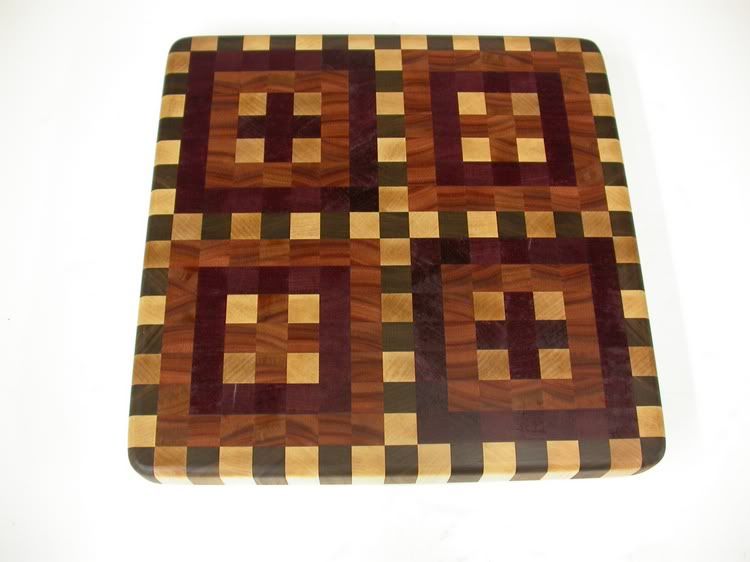
For this board I used maple, walnut, lyptus and purpleheart.
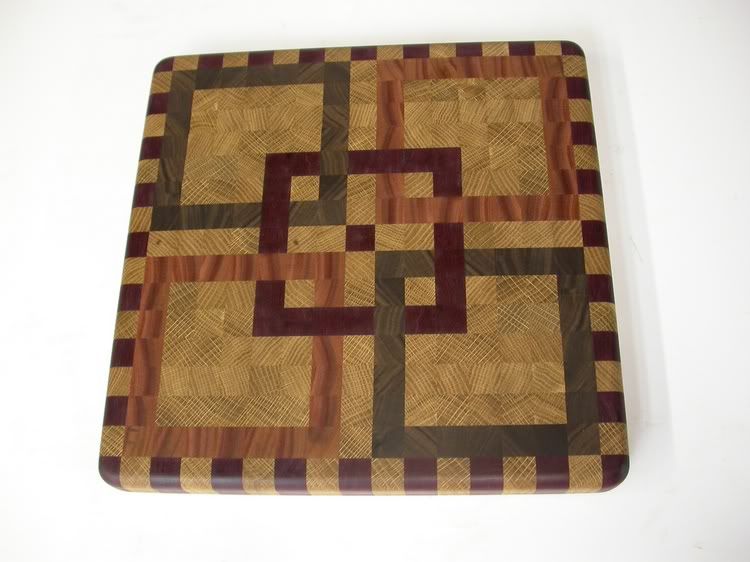
White oak, walnut, lyptus and purpleheart.
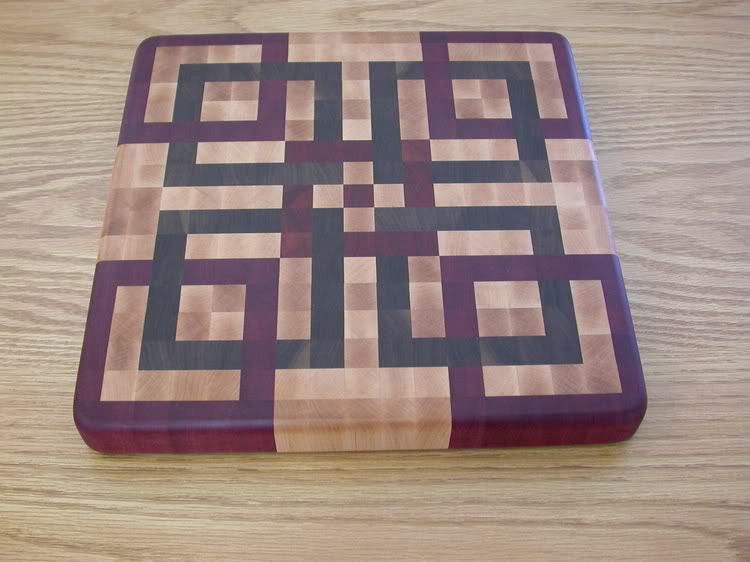
Maple, blood wood, purpleheart and walnut

Maple, walnut, purpleheart and blood wood.
What you will need
Tools I used are table saw with cross cut sled, 6" jointer, 13" plainer, chop saw, band saw, router table with ¾" round over bit # 80 cabinet scraper or belt sander, disc sander random orbit sander and clamps.
Supplies used are 4/4 hardwood stock of multiple species, Tightbond 3 glue, Mineral oil, paper towels or painters rags and bees wax finish for a optional protective top coat. Available here. http://www.woodzone.com/Merchant2/merchant.mvc?Screen=PROD&Product_Code=215808&Category_Code=
Creating your own pattern is as easy as laying out a grid of equal size squares that is 17×17 squares. Each square is ¾" x ¾'. The finished boards will measure 12 ¾" x 12 ¾" x 1 ¼" thick. I designed my patterns using "paint" program on my computer. Or use a cad program that allows color fill. Grid paper with color pencils will work too but making changes is difficult.
Here's a sample of one of my "paint" patterns.
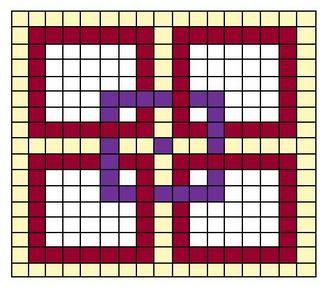
Once you have decided on a pattern count the squares of each color representing the desired wood species in ½ of the pattern plus the center row . Figure on one board foot of stock for each 10 squares. This plan will yield three identical boards. The individual pieces of stock are cut to 10" long primarily for the purpose of milling the stock as you cant run small 1 ½" or 3" pieces of stock threw the plainer. Look closer at the pattern and you'll see that the top half is a mirror image of the bottom half that has been flipped left to right. There fore you only need to create pieces for half of the pattern. The center row does not repeat but the work pieces are the same length and there will be some waste from the un used glued up strips. Or create pieces for the entire pattern to make 6 identical boards.
Before getting started
Before getting started check the condition of your jointer and plainer knives. You will be working with dense woods and tear out can cause small voids in the cutting board surface. Changing plainer knives mid project can cause problems. If there is just a slight variance in stock thickness the patterns will not align correctly.
Milling and cutting your stock
Begin by rough cutting your stock to lengths of 10" Mill the pieces by flattening one face at the jointer.
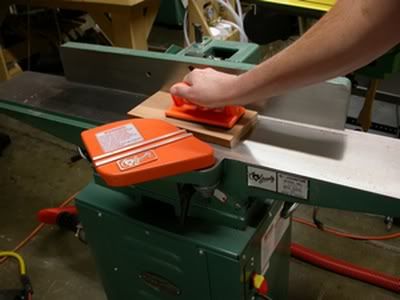
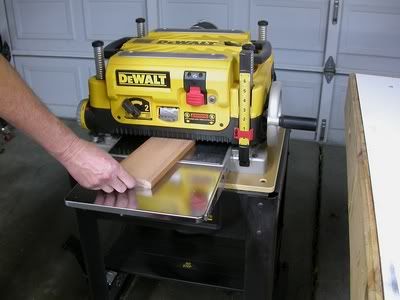
Now run the pieces threw the plainer milling them to ¾" . I recommend checking each piece with a dial caliper to confirm they are the exact same thickness. This is important for proper pattern alignment in the final glue up stage. Detecting a thickness problem now will save you much aggravation and disappointment later.
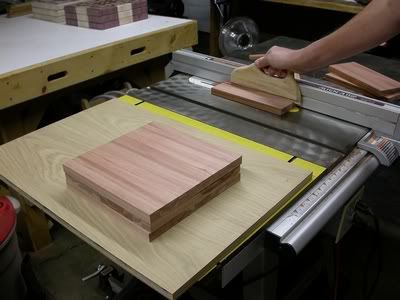
Next joint one edge on the work pieces and rip strips 7/8" wide at the table saw. ( TIP: laying the pieces on a piece of plywood makes transporting them to your work bench a snap.)
Once all the pieces required to create your pattern are ripped you're ready to lay them out in the order they will be glued up in. Using your pattern as a guide lay the pieces out row by row one on top of the other with the ¾" milled faces vertical and facing each other as shown here.
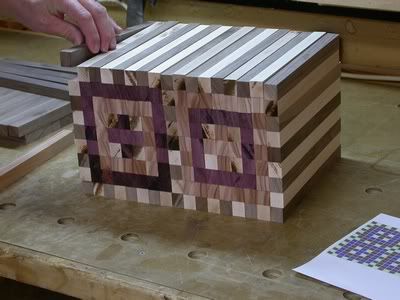
Try to orient the grain direction of each piece the same for the purpose of tear out free plaining after they are glued up.
Remember you only have to complete half of the pattern plus the center row to make three boards. Each glued up row will be milled to ¾" later.
When your sure the rows of stock are in the correct order glue them up one row at a time keeping them in the same order. I lay the pieces on their sides except for the first one and spread a generous amount of glue with a roller on one side only. Rotate and assemble the pieces applying good even clamping pressure. Consistent clamping pressure is important or the pattern may not align correctly.
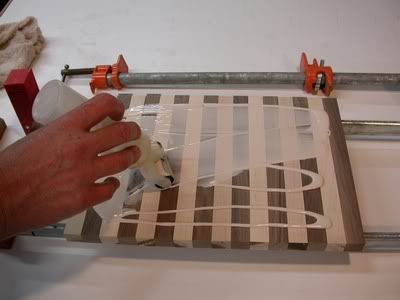
I recommend wiping off the squeeze out now with a damp rag to save scraping labor later.
Once the glue up's have cured remove them from the clamps and scrape and plain one side reasonably flat in preparation for milling.
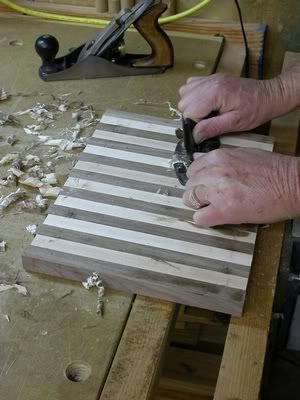
Now mill the glued up sections to ¾". Be sure to pay attention to grain direction and alternate sides to ensure both faces are flattened.
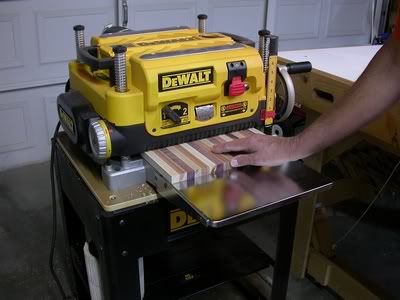
Using a cross cut sled at the table saw trim one end of each glue up. Then set the fence to 1 3/8" and cross cut each glue up into 6 pieces.
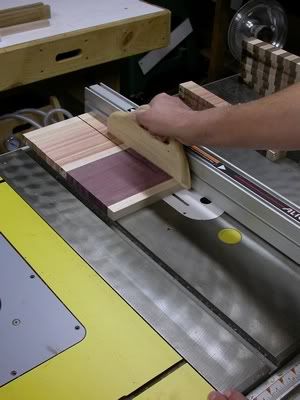
Now for the moment of truth. Lay out the pieces in order using your pattern as a guide.
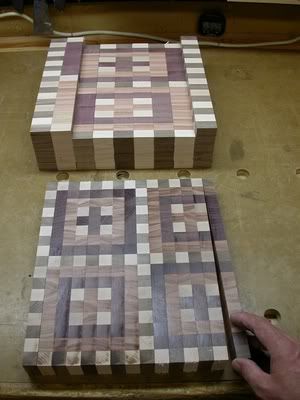
Carefully align the lines of the pattern and make sure things look good. If there are any alignment problems this is the time to correct it. This means creating a new glue up for the problem row or rows. If the proper steps where taken to check the thickness of the milled stock there shouldn't be a problem.
Now you're ready to glue up your boards. The glue up procedure is the same as before. Glue up only 5 or 6 rows at a time to prevent slippage and alignment problems. Press each glue covered piece firmly in place paying strict attention to pattern alignment.
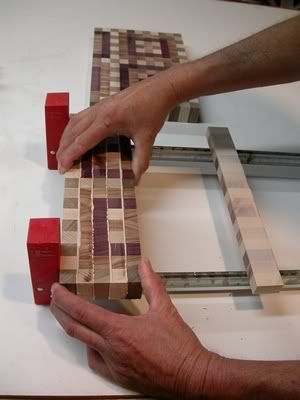
Gradually add clamping pressure checking for slippage as you go. Wipe the squeeze out for better pattern visibility. Allow the glue to set up before repeating the glue up process until the board is complete.
Remove the board from the clamps and flatten one or both faces with a # 80 cabinet scraper or belt sander. The edges are very prone to tear out so stop short of the opposite edge when scraping. You want to get one side of the board reasonable flat so it doesn't rock on a level surface in preparation for plaining.
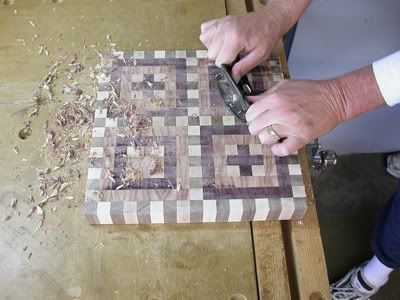
Using a sled at the table saw trim the edges of the board flush Removing only what is necessary to flush the edges. Try to keep all four edges even in appearance.
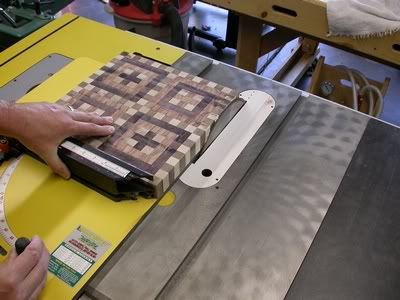
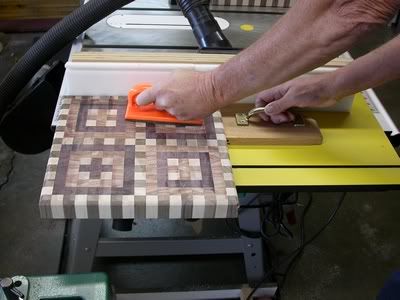
To flatten the boards I ran them through my plainer. Before doing this the edges must be rounded over or sever tear out will occur at the end of the cut. I rounded the edges at the router table with a ¾" round over bit. Chase the work piece with a wood push block to prevent tear out at the end of the cut.
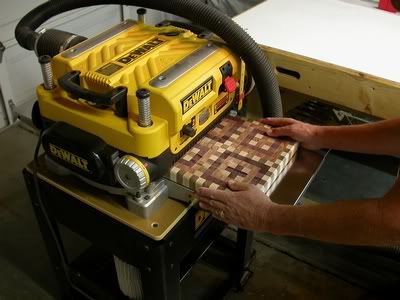
Plaining end grain can be murder on your knives and could even damage your plainer if great care isn't taken to make very light passes. I rotate my depth adjustment wheel 1/8 of a turn or less for each cut.
Once the board is plained flat and smooth round the corners. I used a half dolor to get the desired radius. Make a template of the radius and use it to draw the curve on each corner. Remove the bulk of the waste at the band saw then sand to the line using a disc sander. Now round over the edges again with a ¾" round over bit at the router table. Sand the boards with a random orbit sander to 220 grit. If desired mist the boards with water to raise the grain then sand with 220 again when dry.
Seal the boards
Clean the dust off and apply a generous coat of mineral oil to all surfaces. Allow to soak in for 10 minutes or so and wipe the boards dry with paper towels or rags. Place narrow stickers under the boards and let them sit for a couple days. Some oil may wick out from the wood so wipe them dry again as needed. To add a final luxury to the finish wax the boards with a edible bees wax finish.
A few facts about End Grain Cutting Boards
Why end grain?
There are several distinct advantages to a end grain cutting surface as opposed to a long grain surface. Not only do they look beautiful but they are the supreme cutting surface used in butcher shops for centuries. The surface is much harder and more durable than regular cutting boards and resists knife marks as well as keeping your knives sharp longer. A regular cutting board with the grain running the length of the board will soon show signs of wear due to the knife edge severing and crushing the wood fibers. Some of the wood grain may even break loose and splinter creating a rough porous surface serving as a hiding place for bacteria. With a end grain board the wood fibers are standing on end allowing the knife edge to pass between the wood fibers there for extending the life of the board.
Use and care of your end grain
Cutting board
Use your end grain cutting board for all of your slicing, dicing and chopping needs in the kitchen. To sanitize the board after use wash it with mild soapy water. Never submerge in water or place it in the dishwasher. If you're concerned about bacteria especially after cutting meats use a mister to spray the surface of the board with white vinegar and wipe dry with a paper towel. Proper surface treatment is important to guard against germs and/or mold growth. Cutting boards should be finished regularly (once a moth is optimal) with a mineral oil to maintain their beauty and keep the wood from warping and cracking.
Never use any vegetable or cooking oils to treat or finish the cutting board, as in time the wood will reek of a rancid spoiled oil odor. Wipe the mineral oil on with a clean cloth, let stand for 10 minutes or so and thoroughly wipe dry with a fresh clean dry cloth or paper towels. To further protect and beautify the finish apply a bees wax top coat. Apply the beeswax in much the same manner as the mineral oil. Rub the wax on with a clean soft cloth, allow to dry. Then buff to a lustrous shine using a fresh dry clean cloth.
I hope you found this useful and will enjoy building your own version of these end grain boards. Questions and comments are welcome. Thanks for reading.
Construct these beautiful end grain
Cutting boards
Hello fellow woodworkers,
In the spirit of sharing woodworking knowledge I am writing this tutorial for anyone interested in constructing these beautiful end grain cutting boards. Take a look at the photos of the four styles I have made, or create your own pattern's and follow the steps I have outlined in this tutorial. Questions and comments are welcome, enjoy.

For this board I used maple, walnut, lyptus and purpleheart.

White oak, walnut, lyptus and purpleheart.

Maple, blood wood, purpleheart and walnut

Maple, walnut, purpleheart and blood wood.
What you will need
Tools I used are table saw with cross cut sled, 6" jointer, 13" plainer, chop saw, band saw, router table with ¾" round over bit # 80 cabinet scraper or belt sander, disc sander random orbit sander and clamps.
Supplies used are 4/4 hardwood stock of multiple species, Tightbond 3 glue, Mineral oil, paper towels or painters rags and bees wax finish for a optional protective top coat. Available here. http://www.woodzone.com/Merchant2/merchant.mvc?Screen=PROD&Product_Code=215808&Category_Code=
Creating your own pattern is as easy as laying out a grid of equal size squares that is 17×17 squares. Each square is ¾" x ¾'. The finished boards will measure 12 ¾" x 12 ¾" x 1 ¼" thick. I designed my patterns using "paint" program on my computer. Or use a cad program that allows color fill. Grid paper with color pencils will work too but making changes is difficult.
Here's a sample of one of my "paint" patterns.

Once you have decided on a pattern count the squares of each color representing the desired wood species in ½ of the pattern plus the center row . Figure on one board foot of stock for each 10 squares. This plan will yield three identical boards. The individual pieces of stock are cut to 10" long primarily for the purpose of milling the stock as you cant run small 1 ½" or 3" pieces of stock threw the plainer. Look closer at the pattern and you'll see that the top half is a mirror image of the bottom half that has been flipped left to right. There fore you only need to create pieces for half of the pattern. The center row does not repeat but the work pieces are the same length and there will be some waste from the un used glued up strips. Or create pieces for the entire pattern to make 6 identical boards.
Before getting started
Before getting started check the condition of your jointer and plainer knives. You will be working with dense woods and tear out can cause small voids in the cutting board surface. Changing plainer knives mid project can cause problems. If there is just a slight variance in stock thickness the patterns will not align correctly.
Milling and cutting your stock
Begin by rough cutting your stock to lengths of 10" Mill the pieces by flattening one face at the jointer.

Now run the pieces threw the plainer milling them to ¾" . I recommend checking each piece with a dial caliper to confirm they are the exact same thickness. This is important for proper pattern alignment in the final glue up stage. Detecting a thickness problem now will save you much aggravation and disappointment later.

Next joint one edge on the work pieces and rip strips 7/8" wide at the table saw. ( TIP: laying the pieces on a piece of plywood makes transporting them to your work bench a snap.)

Once all the pieces required to create your pattern are ripped you're ready to lay them out in the order they will be glued up in. Using your pattern as a guide lay the pieces out row by row one on top of the other with the ¾" milled faces vertical and facing each other as shown here.

Try to orient the grain direction of each piece the same for the purpose of tear out free plaining after they are glued up.
Remember you only have to complete half of the pattern plus the center row to make three boards. Each glued up row will be milled to ¾" later.
When your sure the rows of stock are in the correct order glue them up one row at a time keeping them in the same order. I lay the pieces on their sides except for the first one and spread a generous amount of glue with a roller on one side only. Rotate and assemble the pieces applying good even clamping pressure. Consistent clamping pressure is important or the pattern may not align correctly.

I recommend wiping off the squeeze out now with a damp rag to save scraping labor later.
Once the glue up's have cured remove them from the clamps and scrape and plain one side reasonably flat in preparation for milling.

Now mill the glued up sections to ¾". Be sure to pay attention to grain direction and alternate sides to ensure both faces are flattened.

Using a cross cut sled at the table saw trim one end of each glue up. Then set the fence to 1 3/8" and cross cut each glue up into 6 pieces.

Now for the moment of truth. Lay out the pieces in order using your pattern as a guide.

Carefully align the lines of the pattern and make sure things look good. If there are any alignment problems this is the time to correct it. This means creating a new glue up for the problem row or rows. If the proper steps where taken to check the thickness of the milled stock there shouldn't be a problem.
Now you're ready to glue up your boards. The glue up procedure is the same as before. Glue up only 5 or 6 rows at a time to prevent slippage and alignment problems. Press each glue covered piece firmly in place paying strict attention to pattern alignment.

Gradually add clamping pressure checking for slippage as you go. Wipe the squeeze out for better pattern visibility. Allow the glue to set up before repeating the glue up process until the board is complete.
Remove the board from the clamps and flatten one or both faces with a # 80 cabinet scraper or belt sander. The edges are very prone to tear out so stop short of the opposite edge when scraping. You want to get one side of the board reasonable flat so it doesn't rock on a level surface in preparation for plaining.

Using a sled at the table saw trim the edges of the board flush Removing only what is necessary to flush the edges. Try to keep all four edges even in appearance.

To flatten the boards I ran them through my plainer. Before doing this the edges must be rounded over or sever tear out will occur at the end of the cut. I rounded the edges at the router table with a ¾" round over bit. Chase the work piece with a wood push block to prevent tear out at the end of the cut.

Plaining end grain can be murder on your knives and could even damage your plainer if great care isn't taken to make very light passes. I rotate my depth adjustment wheel 1/8 of a turn or less for each cut.

Once the board is plained flat and smooth round the corners. I used a half dolor to get the desired radius. Make a template of the radius and use it to draw the curve on each corner. Remove the bulk of the waste at the band saw then sand to the line using a disc sander. Now round over the edges again with a ¾" round over bit at the router table. Sand the boards with a random orbit sander to 220 grit. If desired mist the boards with water to raise the grain then sand with 220 again when dry.
Seal the boards
Clean the dust off and apply a generous coat of mineral oil to all surfaces. Allow to soak in for 10 minutes or so and wipe the boards dry with paper towels or rags. Place narrow stickers under the boards and let them sit for a couple days. Some oil may wick out from the wood so wipe them dry again as needed. To add a final luxury to the finish wax the boards with a edible bees wax finish.
A few facts about End Grain Cutting Boards
Why end grain?
There are several distinct advantages to a end grain cutting surface as opposed to a long grain surface. Not only do they look beautiful but they are the supreme cutting surface used in butcher shops for centuries. The surface is much harder and more durable than regular cutting boards and resists knife marks as well as keeping your knives sharp longer. A regular cutting board with the grain running the length of the board will soon show signs of wear due to the knife edge severing and crushing the wood fibers. Some of the wood grain may even break loose and splinter creating a rough porous surface serving as a hiding place for bacteria. With a end grain board the wood fibers are standing on end allowing the knife edge to pass between the wood fibers there for extending the life of the board.
Use and care of your end grain
Cutting board
Use your end grain cutting board for all of your slicing, dicing and chopping needs in the kitchen. To sanitize the board after use wash it with mild soapy water. Never submerge in water or place it in the dishwasher. If you're concerned about bacteria especially after cutting meats use a mister to spray the surface of the board with white vinegar and wipe dry with a paper towel. Proper surface treatment is important to guard against germs and/or mold growth. Cutting boards should be finished regularly (once a moth is optimal) with a mineral oil to maintain their beauty and keep the wood from warping and cracking.
Never use any vegetable or cooking oils to treat or finish the cutting board, as in time the wood will reek of a rancid spoiled oil odor. Wipe the mineral oil on with a clean cloth, let stand for 10 minutes or so and thoroughly wipe dry with a fresh clean dry cloth or paper towels. To further protect and beautify the finish apply a bees wax top coat. Apply the beeswax in much the same manner as the mineral oil. Rub the wax on with a clean soft cloth, allow to dry. Then buff to a lustrous shine using a fresh dry clean cloth.
I hope you found this useful and will enjoy building your own version of these end grain boards. Questions and comments are welcome. Thanks for reading.